
 12 In Stock
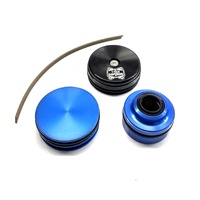
T-Tech 40mm Rear ESA Shock Service Kit for BMW R 1
BMW 2013+ R1200/R1250 GS/GS Adventure(SKU: 22-710-10)
$385.00
Find your Bike:
The liquid-cooled BMW R 1200 GS arrived in 2013 and continued the GS tradition of combining long-distance comfort, everyday usability and genuine rough-road ability. The later R 1250 GS refined the same formula rather than replacing it, retaining the Telelever front end, Paralever rear suspension and electronically controlled ESA damping that define the modern boxer GS.
These motorcycles carry their weight remarkably well. The suspension limits brake dive, maintains stability with luggage and gives riders a level of confidence that helps explain why the GS remains one of the dominant large-capacity adventure motorcycles. It is not a lightweight trail bike, but it is unusually capable across sealed roads, gravel, touring and two-up use.
When the liquid-cooled platform was introduced, BMW moved away from the Showa and WP suspension used on earlier models and adopted Sachs components. Sachs later became part of ZF, so the names Sachs and ZF are commonly used interchangeably. Variations of this suspension architecture continued through the R 1250 GS generation.
The GS and GSA suspension units are physically interchangeable within the corresponding platform. Fitting GSA-length suspension to a GS raises the motorcycle, while fitting GS-length suspension to a GSA lowers it. This can be useful, but it changes seat height, steering geometry, stand requirements and available suspension travel, so it should be treated as a complete chassis decision rather than a simple lowering or raising trick.
In our experience, the original BMW ESA suspension is not inherently poor. When it is in good condition and carrying a suitable load, it offers good comfort, stability and convenience. Its weaknesses are spring selection, contamination protection, internal serviceability and the limitations of the original electronic preload mechanism under heavy loads.
For that reason, we do not automatically recommend replacing every BMW shock with an aftermarket unit. Some riders are best served by rebuilding and improving the original Sachs dampers. Others will benefit from the faster electronic damping control, greater spring capacity and heavier-duty preload system available from TracTive. The correct choice depends on rider weight, luggage, passenger use, terrain and how long the motorcycle is expected to remain in service.
The BMW Telelever front end separates steering and suspension loads more effectively than a conventional telescopic fork. The fork legs primarily locate and guide the wheel, while a centrally mounted ESA shock controls spring and damping forces. This arrangement greatly reduces brake dive and contributes to the calm, stable feel for which the GS is known.
The Sachs front shock performs well when new. It provides good comfort, maintains chassis attitude under braking and works effectively with BMW's electronic damping strategy. The standard front spring is approximately 50 N/mm, which is generally suitable for a rider around 75–80 kg with modest luggage. Heavier riders can often achieve acceptable ride height only by operating with consistently high preload.
The most common physical weakness we see is the absence of a proper external dust wiper on the original front seal head. Dirt accumulates around the shaft and seal area, eventually contaminating or damaging the sealing surface. Front shock oil leaks are therefore relatively common, particularly on motorcycles that spend time in dust, mud or poor weather.
Teknik can rebuild the original BMW ESA front shock using specialist components developed by T-Tech Suspension in the UK. The replacement seal head incorporates a proper dust wiper, improving protection around the shock shaft and addressing one of the main causes of front shock leakage.
The conversion also uses revised reservoir and gas-charging components where applicable. These increase usable oil and gas volume, provide a practical method of recharging the nitrogen and mechanically secure internal components that are not adequately retained in the original construction. The result is a serviceable shock that retains the BMW electronic controls and performs considerably better than a simple seal replacement.
For many road and touring riders, this is the sensible value option. The original shock can be restored, its known serviceability problems can be corrected and the motorcycle retains its factory ESA operation. As at July 2026, a typical rebuild and conversion is approximately $750 per end, subject to condition and parts required.
A rebuilt Sachs front shock can be very good. The main advantage of TracTive is not that the original unit cannot be repaired, but that TracTive uses a much faster electronically controlled damping valve.
The motorcycle's suspension position sensors allow the control system to identify whether the front suspension is moving through compression or rebound. TracTive's valve can then alter its position extremely quickly, producing different damping behaviour in each direction through the same electronic adjuster. This allows the shock to respond more closely to the force requested by the control system as the suspension changes direction.
In practical terms, the rider gets more immediate damping control over repeated bumps, braking movements and rapidly changing road surfaces. The improvement is most noticeable when the motorcycle is ridden briskly, heavily loaded or across rough terrain where the suspension is continually changing direction.
TracTive offers several front configurations, including simpler emulsion-type units and higher-specification reservoir shocks with separate high- and low-speed compression adjustment. These remain compatible with the BMW ESA system, but the best choice depends on the rider's use rather than the number of adjusters fitted.
The Paralever rear suspension controls shaft-drive reaction while allowing the GS to maintain traction and stability under acceleration. As with the front, most of the suspension behaviour is determined by the centrally mounted Sachs ESA shock and its electronic preload mechanism.
The standard rear spring is approximately 138 N/mm. In our experience, this is adequate for a rider around 75–80 kg travelling relatively lightly. It becomes marginal once rider weight, luggage and passenger load increase, and the electronic preload system must then operate near the upper end of its range simply to restore normal ride height.
For an 80–85 kg rider who carries luggage and occasionally takes a passenger, we generally find a rear spring around 150 N/mm provides a better balance. TracTive commonly supplies a 160 N/mm spring unless another rate is requested, but we consider that unnecessarily firm for many solo or lightly loaded Australian riders. Spring selection should be based on actual operating load, not merely the motorcycle model.
The original rear shock can also be rebuilt using T-Tech components. The conversion addresses the lack of practical gas-charging provision, increases internal volume and improves the mechanical retention of the internal compression-valve assembly where required. This converts a unit that was not intended for routine servicing into a shock that can be properly rebuilt and regassed.
One of the original Sachs units uses a reservoir arrangement without an effective compression valve in the cylinder head and therefore behaves more like a conventional internal floating piston shock. On the unit that does use the pressed-in compression-valve arrangement, a severe high-speed suspension event can displace the peened retention. This does not normally cause immediate mechanical damage, but the shock no longer maintains its intended pressure balance and effectively reverts to simpler IFP behaviour.
The T-Tech reservoir housing mechanically retains this assembly, preventing it from being pushed out of position. Combined with the revised seal head and larger gas-cap arrangement, the conversion produces a reliable and serviceable OEM-based shock at a comparatively modest cost.
TracTive rear shocks can be supplied without a new preload mechanism, allowing the original BMW electronic preload adjuster to be transferred across. This reduces the purchase cost and can be suitable for lighter riders using spring rates close to standard.
However, the BMW preload adjuster does not tolerate contamination particularly well. Water, sand and dirt can damage the mechanism, and the internal gears can struggle with spring rates above approximately 150 N/mm. This becomes important for heavier riders, regular pillion use and loaded touring, where spring rates of 170–180 N/mm may be appropriate.
A common warning sign is that selecting the rider, luggage or pillion settings produces little or no change in rear ride height while the motorcycle is loaded. The adjuster may operate only after the motorcycle is placed on a stand and the rear wheel is unloaded. At that point, the mechanism is no longer producing enough force to move the spring reliably under normal operating load.
A rebuilt Sachs shock solves many of the original durability and serviceability issues. The reason riders choose TracTive instead is the way it controls damping.
Rather than using a conventional electronically adjustable needle, TracTive employs an extremely fast electronic valve that controls a large bleed circuit within the damper. According to TracTive co-owner and Technical Manager Jochum Rijpma, the valve is capable of opening and closing more than 1,000 times every second.
The suspension position sensors continuously determine whether the shock is moving through compression or rebound and how quickly it is moving. The ECU then commands the valve accordingly, allowing the bleed circuit to change almost instantaneously as suspension direction changes.
In practice, this means the suspension spends less time "catching up" to changing road conditions. The damping requested by the control system is available almost immediately, improving tyre contact, chassis stability and rider confidence over rough roads and rapidly changing surfaces.
12 In Stock
T-Tech 40mm Rear ESA Shock Service Kit for BMW R 1
BMW 2013+ R1200/R1250 GS/GS Adventure(SKU: 22-710-10)
$385.00
 Nil Stock
T-Tech 36mm Front ESA Shock Service Kit for BMW R
BMW 2013+ R1200/R1250 GS/GS Adventure(SKU: 22-710-12)
$385.00
© 2026 Teknik Motorsport Pty Ltd. ABN: 29137380324. All rights reserved.