
CFMoto 800 MT-X

The CFMOTO 800MT-X makes a strong first impression. It looks properly purposeful, the 799cc twin has plenty of punch, and the standard equipment list is hard to ignore at the price. The suspension specification reads well too: 48mm YU'AN upside-down forks, a piggyback rear shock, 230mm of claimed travel at both ends, and adjustment for preload, compression and rebound.
That sounds like serious adventure-bike suspension. We wanted to know whether the internals matched the specification sheet, so we stripped, measured and tested the standard components. What we found was a decent basic layout let down by several detail decisions. In the fork, those decisions also make a practical upgrade kit difficult to produce.
The 800MT-X does not need replacement suspension before it can leave the driveway. Riders should, however, understand that the external adjusters cannot overcome the fork's internal restrictions.
CFMoto 800 MT-X Forks
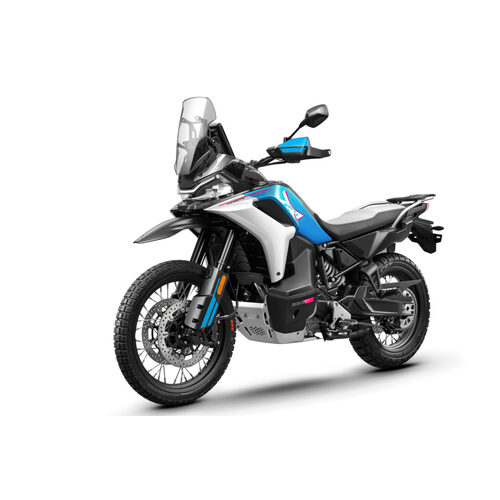
The 48mm YU'AN forks use a layout that will look familiar to anyone who has worked on WP XPLOR forks. Compression damping is handled in the left leg and rebound in the right, with preload adjustment on both sides. The cartridge arrangement, compression plunger and dual-purpose bottoming-cone seal case also follow a similar idea.
Similarity does not mean the parts are interchangeable. The cartridge thread pitch differs from the WP design, and the base-valve arrangement is different enough that proven XPLOR parts cannot simply be fitted. The 800MT-X also uses a proprietary 48 x 58 x 7mm oil seal. Common low-friction seals for 48mm forks are 9mm thick and will not fit the available space. That leaves the high seal drag, or stiction, as an ongoing limitation because there is currently no direct low-friction replacement in the required size.
Our main concern was the amount of friction in the standard fork and the lack of useful compression damping. The compression-side seal case has very large bleed holes, allowing much of the oil flow to bypass the damping circuit. We ran the fork with the cartridge removed and measured almost the same resistance, confirming that seal drag was doing much of the work that should have come from controlled hydraulic damping. That also explains why the external compression adjuster had little effect on the test bike.
Correcting these problems would require a bespoke seal arrangement, custom-machined parts and substantial internal rework. It is not a normal piston-and-shim upgrade, and the non-standard components prevent us from producing a repeatable kit that customers or suspension workshops could install with confidence.
For those reasons, Teknik has no immediate plans to develop or sell an upgrade kit for the standard 800MT-X fork. This is a limitation of the fork design rather than a lack of adjustment range or a valving problem that can be solved with a conventional kit
CFMoto 800 MT-X Shock
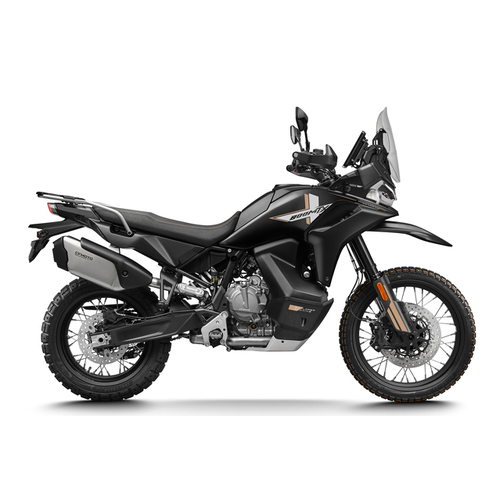
The YU'AN piggyback shock is also clearly influenced by familiar European designs, although it uses a bladder rather than an internal floating piston to separate the gas and oil. The basic layout is serviceable, and the compression adjuster itself worked well on our test unit. Once rebuilt and revalved, the shock produced a worthwhile improvement.
The condition of the original bladder was less encouraging. Our test bike was under a year old, yet gas had already migrated through the bladder and into the oil. When the reservoir was depressurised, the shaft continued to extend because the oil itself had become pressurised. That is evidence from one shock rather than proof that every 800MT-X will behave the same way, but it is a weak point worth addressing during a service. We replaced the original bladder with a suitable KYB component before revalving the shock.
We also found rough finishing around the internal retaining-clip grooves. This matters during disassembly because a sharp groove can damage the bladder as it is removed. The reservoir body must be handled carefully and the internal edges checked before the replacement bladder is installed.
The other important finding was the rear suspension geometry. The 800MT-X swingarm and shock layout look similar to the KTM 890 Adventure R, which has led to claims that the rear ends are effectively the same. Our measurements show otherwise. The swingarm lengths are close, but the shock mounting points are different. We calculated an approximate motion ratio of 2.9:1 for the 800MT-X compared with about 2.25:1 for the 890 R. That difference helps explain why the CFMOTO uses a substantially higher 132N/mm standard spring rate. Spring recommendations from the KTM should not be copied across without checking the CFMOTO's own sag, load and geometry.
The test showed that the shock's basic damping architecture has potential, but the original bladder and internal finishing deserve scrutiny.
The testing also showed that the shock's 50mm-piston damping architecture has potential, but its non-standard design, original bladder and internal finishing currently limit the prospects for a repeatable upgrade kit. We may develop a shock upgrade kit at a later date, but only after further evaluation confirms that we can offer a consistent and supportable result
Our Conclusion
The 800MT-X fork is not a suitable basis for a conventional upgrade kit. Spring rate, preload and oil level can still be selected for the rider and load, but those changes do not correct the ineffective compression circuit or the non-standard internal parts. The proprietary seal dimensions also mean the fork's stiction remains an ongoing issue because ordinary low-friction 48mm seals cannot be fitted.
Recommended Starting Point
Correct spring rates are the recommended starting point for the 800MT-X. Matching the springs to the rider, luggage and intended use allows the sag, ride height and chassis balance to be set correctly while preserving useful suspension travel. Teknik offers Hi-Calibre 19-210 series fork springs and Eibach 0800.250 series rear shock springs for this application.
Springs cannot remove the fork's stiction or correct its ineffective compression circuit, but they provide the right baseline without relying on an unsupported valving kit. The recommended KYB replacement shock bladder identified during our testing is also included in the linked 800MT-X parts listing.
Find more parts for your CFMOTO 800MT-X: CFMOTO 800MT-X 2025 suspension parts