
Kawasaki KLE500
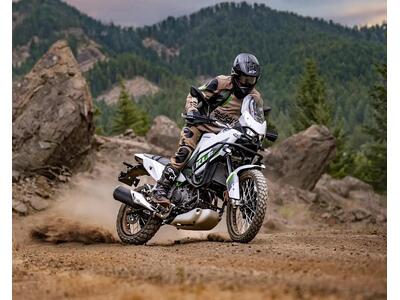
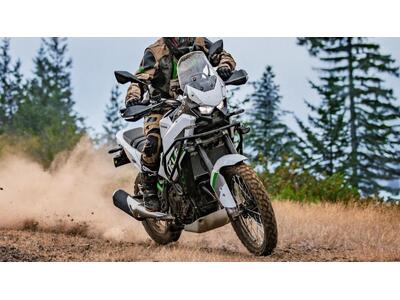
It seems every few months another budget middleweight adventure bike rolls through our doors with more features than the last: colour displays, riding modes, off-road traction control and adjustable suspension. It raises an obvious question: what has been compromised to put all of that into the price?
The 2026 Kawasaki KLE500 takes a simpler approach. It has a high-tensile steel trellis frame, relatively few electronic distractions and suspension with very little external adjustment. On the specification sheet it looks basic. Basic, however, is not the same as crude.
We stripped, measured and dyno-tested the KLE500 suspension before carrying out our initial road testing. We did not test the bike in hard off-road, its an adventure bike, we rode terrain the bike will be most likely be used on, not a MX track.
What we found was refreshing. Kawasaki has controlled the price without using the cheapest possible suspension architecture. The damping at both ends is well developed, and the forks in particular perform much better than their lack of adjusters suggests.
The KLE500 does not need to be fixed before it can be ridden. Its worthwhile suspension upgrades are quite specific: select the correct spring rates for the rider and load, then add front compression adjustment if the standard setting does not suit. At the rear, changing the spring may be sufficient; riders wanting substantially more damping control will need to consider a complete aftermarket shock.
Kawasaki KLE500 Forks
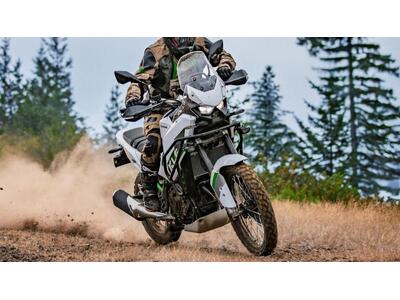
The Kawasaki KLE500 uses 43mm KYB upside-down, open-cartridge forks with 210mm of wheel travel. They are not externally adjustable, which is the obvious omission when several competing adventure bikes offer at least some form of adjustment.
Look beyond the adjusters, however, and these are some of the better forks we have tested on an adventure bike at this price. Each leg contains a proper cartridge and base valve. The KLE does not use a basic damper-rod design or divide compression and rebound control between two largely independent fork legs.
Our dyno testing found good damping response and a well-controlled curve in standard form. The standard 4.7N/mm fork springs should suit many solo riders, although spring selection must still account for rider weight, luggage, accessories and intended use.
For riders wanting greater control, we developed a replacement base valve with an external compression adjuster. Testing produced an adjustment range extending from softer than standard, through the original setting, to firmer compression damping. The new valve also produced a modest improvement in response time.
https://www.teknikmotorsport.com/30-162-00-kle-500-fork-kit
This is a useful, cost-effective upgrade rather than an attempt to turn the KLE500 into a competition enduro bike. It retains the compliance that makes the standard fork work well while allowing the rider to adjust its support for load, terrain and riding pace.
Kawasaki KLE500 Shock
The KLE500 rear shock is less sophisticated externally, with spring preload adjustment but no compression or rebound adjusters. Internally, however, it is considerably better than its specification suggests.
The shock uses a 40mm piston and an internal floating piston to separate the oil from the nitrogen. The standard shim stack is properly designed, and our dyno testing found a sound damping curve with no fundamental problem requiring correction. There is room to increase low-speed and overall damping, but the improvement is difficult to justify when the shock is factory sealed and was not intended to be routinely serviced.
We fitted a service port and modified the piston and valving while our test shock was apart. The result confirmed that the shock can be rebuilt and altered, but also that revalving the original unit is unlikely to be the most sensible retail upgrade. Without external adjusters, its useful tuning range remains limited.
We also found corrosion inside the gas chamber and beneath the strike-plate cover of our test shock. One example does not establish a widespread fault, but it raises a reasonable question about long-term durability because continuing corrosion could eventually damage the gas-separator O-ring.
The first step should therefore be to establish the correct spring rate and set the sag properly. If the rear still does not provide the control or consistency required, a serviceable aftermarket shock with proper damping adjustment is the logical solution. Both Ohlins and YSS have adjustable shocks. Ask us for more details if you are interested in that option.